
Iredell County Probate Records
Probate records in Iredell County usually begin after a death when a will must be filed, an estate must be opened, or property must be collected and distributed through a legal estate process. The NC Courts Wills and Estates help topic is the statewide starting point for estates, while local filing and record access run through the Iredell County Clerk of Superior Court. Estate files can include the application to open the estate, a will, letters testamentary or letters of administration, inventories, accountings, creditor notices, claims, receipts, orders, and closing documents.
Guardianship and certain special proceedings may also involve the clerk office, but not every guardianship detail is a public probate record. Some cases involve minors, protected adults, medical information, or sealed materials. Historical estate research is different from current probate access. The Iredell County Public Library historical county-records page lists inventory dockets, special proceedings from 1788 to 1925, and other older court series useful for genealogy, while active and recent estate files are clerk and Portal matters.
The manifest image below comes from the NC Courts wills and estates source, which is the statewide public explanation for estate work in Iredell County.
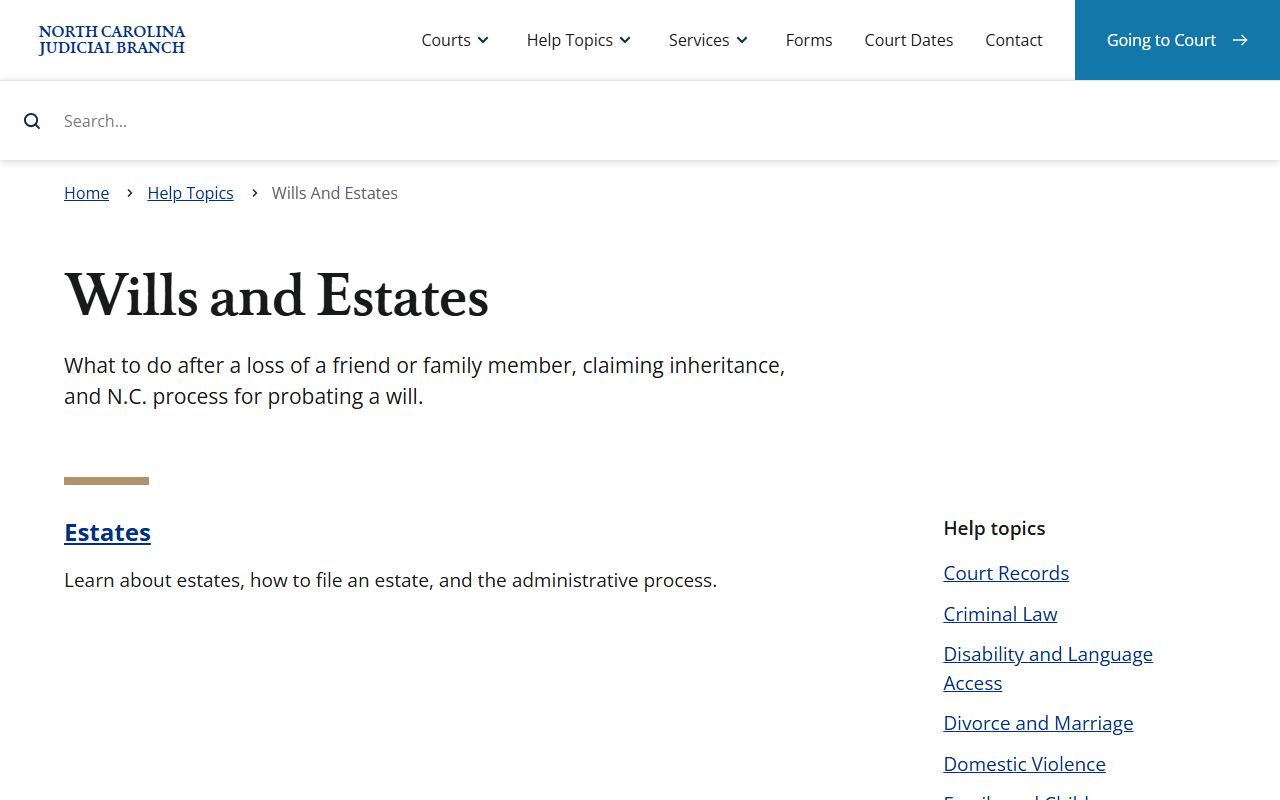
Statewide estate guidance is helpful, but Iredell County probate records still need local clerk access for filing, copies, terminal searches, and case-specific questions.
Iredell County Probate Terms
Estate files use terms that are easy to mix up. The terms below are short working definitions for Iredell County probate records and clerk estate files. They do not decide whether a person qualifies for an appointment, whether an estate can use a small-estate procedure, or whether a document can be released.
- Testator
- The person who made a valid will before death.
- Executor
- The person named in a will to carry out estate duties after appointment by the clerk.
- Administrator
- A person appointed when there is no will or no named executor able to serve.
- Intestate
- Dying without a will, which changes how property is distributed under state law.
- Guardianship
- A proceeding involving authority over a minor or an adult who needs a legal guardian.
- Conservatorship
- A property-management role used in some states; in North Carolina estate research, ask the clerk which guardianship or estate term applies.
Search Iredell County Estates
Online estate searching starts with the North Carolina eCourts Portal when the estate information is available there. Use Smart Search for a decedent or party name, or use a known estate case number. The Portal training materials describe Advanced Filtering Options, and the research inventory names Estates as a category that may be selected where available. If the online result is thin, use the public terminal in the clerk office or call Estates at (704) 832-6604.
- Search Smart Search by decedent name, interested party name, or estate case number.
- Open Advanced Filtering Options and select Estates when the filter is available for the search.
- Limit by Iredell County, date, case status, or party information if the result set is too broad.
- Use the clerk public terminal for estate or special proceeding information that is not visible remotely.
- Call the Estates division at (704) 832-6604 before requesting copies, certified estate papers, or older files.
| Search field or channel | Type | Use |
|---|---|---|
| Smart Search | Text | Search by decedent, party name, or estate case number. |
| Advanced Filtering Options | Expandable filters | Select Estates and filter by location, party, date, or status where available. |
| Public terminal search | Clerk-office terminal | Use for estates and special proceedings not complete online. |
| Estates division phone | Phone channel | (704) 832-6604 for local routing and copy questions. |
Note: A Portal estate hit may confirm a case exists, but full filings and certified copies may still require the clerk office.
Iredell County Estate Procedure
The North Carolina Estate Procedure pamphlet, hosted by NC Courts and by Iredell County, states that court costs and fees are paid to the Clerk of Superior Court and that the clerk's office informs filers of the amounts. It also stresses that personal representatives must keep accurate records and file accurate accounts. That duty matters in Iredell County probate records because inventories, accountings, claims, and distributions can become part of the estate file.
A typical Iredell County estate path begins by deciding whether the decedent lived in Iredell County or owned property requiring administration there. The filer then contacts Estates or reviews official estate forms and guidance. The will, application, death certificate, and required forms are filed with the Clerk of Superior Court. If appointed, the personal representative receives authority, gives notices, collects assets, files inventory and accounting material, handles claims, distributes remaining property, and closes the estate when the clerk accepts the final filings.
| Estate stage | Common record created | Clerk role |
|---|---|---|
| Opening | Application, will, death certificate, oath | Accept filings and determine appointment path |
| Appointment | Letters testamentary or administration | Issue authority to the representative |
| Administration | Inventory, notices, claims, accountings | Receive and review required filings |
| Distribution | Receipts, final accounting, closing papers | Review closing documents and file status |
Iredell County Probate Fees
Probate filing costs are current-schedule items, not fixed text that should be copied from an old form. The NC Judicial Branch current court costs page publishes 2026 Estates Court Costs and related cost PDFs. The estate procedure pamphlet says costs and fees are paid to the Clerk of Superior Court and that the clerk informs filers of amounts. Iredell County users should call the Estates division before mailing money or relying on an outdated fee sheet.
| Probate cost item | Amount or source |
|---|---|
| Estate filing and administration costs | Use NC Judicial Branch Estates Court Costs 2026 PDF |
| Court costs and clerk fees | Paid to Clerk of Superior Court; exact amount supplied by clerk |
| Certified estate copies | Use current miscellaneous or copy schedule, or call Estates |
| Guardianship or special proceeding costs | Use current special proceedings and estates schedules as applicable |
The manifest image below comes from the North Carolina Chapter 7A court costs and clerk fees source, which supports the probate fee framework used by the clerk.
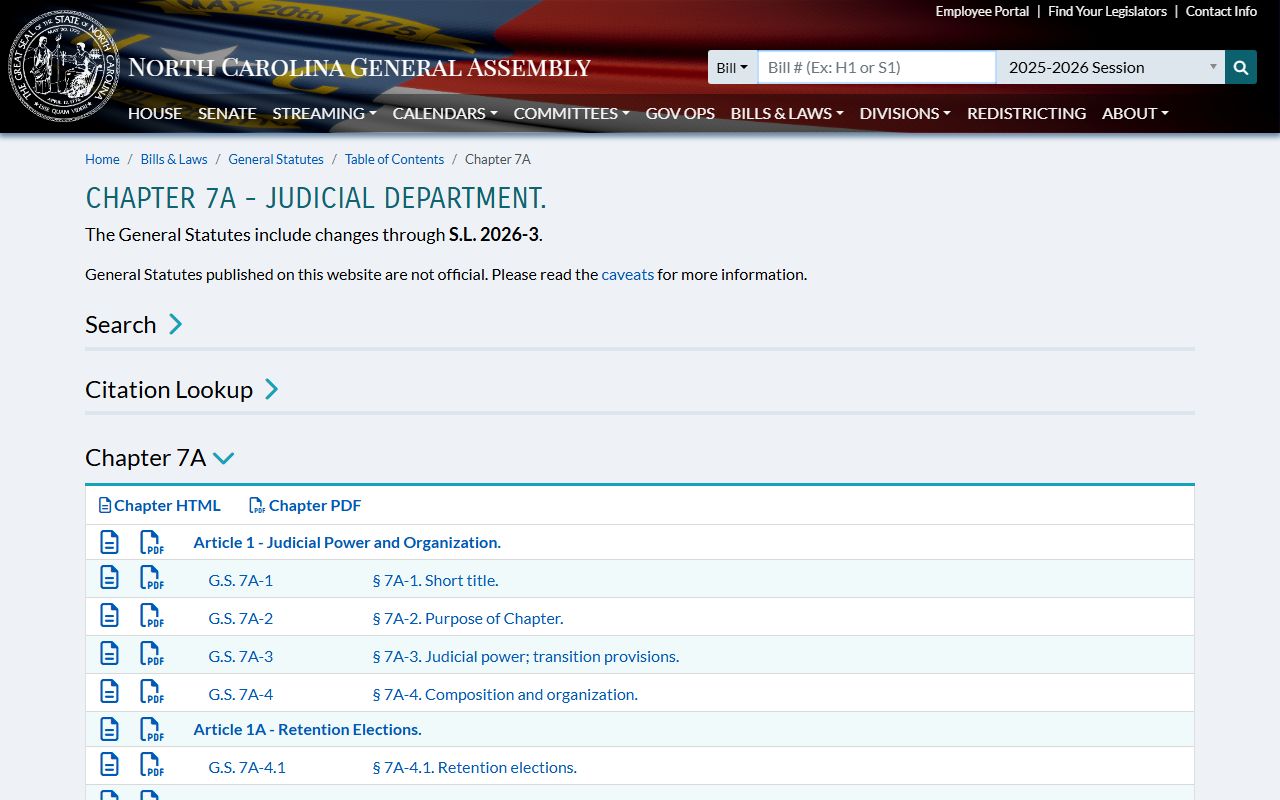
Because costs change by schedule and case type, Iredell County probate records requests should use the current NC Courts costs page or direct Estates confirmation.
Restricted Probate Records
Many estate records are public once filed, but probate access is not unlimited. Documents can include personal identifying information, financial account detail, minor names, medical facts, protected adult information, or sealed orders. Guardianship and some special proceeding files may have stronger access limits than a routine estate administration. Public terminals and Portal results may show case information without displaying every document image.
Older historical estate material should also be handled carefully. The library's historical records index may help genealogy research, but it is not the same as a current certified estate file. For a legal copy, a certified paper, or proof of appointment, the Iredell County Clerk of Superior Court is the proper source. For a marriage certificate linked to an estate, use the Register of Deeds. For a sheriff event linked to a death investigation, use sheriff or law-enforcement channels rather than probate.