
Iredell County Criminal Court Records
A criminal court record is the court-maintained case file, not the first law-enforcement record. In Iredell County, an arrest, citation, warrant, or magistrate process may create the first public event. The criminal court record begins to matter when charges are filed and the case is tracked through District Court or Superior Court. Clerk Jim Mixson's office is the local custodian for the case file, including public terminal access, copies, and certified records when available.
North Carolina's court structure affects how Iredell County criminal court records should be read. District Court handles misdemeanors, infractions, many first appearances, and early criminal settings. Superior Court is the general-jurisdiction trial court for felony prosecutions and certain appeals. Magistrates handle front-end criminal processes such as initial appearances and certain warrants. Appeals from trial court generally route to the North Carolina Court of Appeals.
The official District Court page explains the kinds of criminal and infraction matters heard in that division.
District Court context is essential when an Iredell County criminal matter is a misdemeanor, infraction, first appearance, or early felony setting.
Search Iredell County Criminal Cases
The main public search path is the North Carolina eCourts Portal. Smart Search can be used for criminal actions by defendant name, case number, docket number, or other supported fields. Search Hearings can be used when the question is the next court date or hearing assignment. NC Courts also states that criminal case information is available on clerk-office public terminals and can be searched by defendant name, case number, or victim/witness name.
- Start with Smart Search and enter the defendant name or known criminal case number.
- Use Advanced Filtering Options to narrow by Iredell County, case category, case status, and date when the result set is broad.
- Open Search Hearings if the immediate need is a court date, courtroom, judicial officer, or hearing type.
- Read the docket entries and disposition carefully before treating a charge as a conviction.
- Contact the criminal division of the Clerk of Superior Court for public terminal access, certified copies, or case details not visible online.
The criminal division phone listed in the research is (704) 832-6602. The main Clerk of Superior Court number is (704) 832-6600. For background checks, NC Courts directs users to the county clerk's office rather than relying on Portal alone.
Iredell County Criminal Case Flow
Criminal court records grow as the case moves through the system. A case may start with a warrant, citation, arrest, or magistrate process. Prosecutorial District 32, led by District Attorney Sarah Kirkman, represents the State in Iredell County criminal prosecutions. The DA may file or prosecute charges, seek indictments, negotiate pleas, dismiss charges, handle probation violations, and respond to some expunction petitions. DA work product is not the same as the public court file.
Case flow: Charges Filed › Arraignment › Pretrial / Motions › Plea or Trial › Disposition › Sentencing
| Stage | What the Criminal Court Record May Show |
|---|---|
| Charges Filed | Offense name, statute, count, class, warrant or citation link, and court division. |
| Arraignment / First Settings | Initial court dates, plea status, counsel status, and scheduling entries. |
| Pretrial / Motions | Motions, continuances, bond changes, notices, discovery-related orders, and hearing results. |
| Plea or Trial | Plea entries, trial settings, verdict entries, dismissals, or negotiated outcomes. |
| Disposition | Guilty, not guilty, dismissed, judgment entered, deferred or other final charge outcome. |
| Sentencing | Active sentence, probation, restitution, fines, costs, attorney fees, and payment events when public. |
The District Attorney page for Prosecutorial District 32 identifies Sarah Kirkman and explains the prosecutor's role for Alexander and Iredell counties.
What Iredell County Criminal Records Show
The public criminal case record can contain both status information and legal outcomes. Some fields are visible through Portal, some are available on clerk public terminals, and some document images or certified copies require clerk staff. A complete criminal court record may include the charge as filed, later amendments, motions, hearing activity, plea, disposition, sentencing, probation terms, restitution, and cost entries.
| Field | What It Shows |
|---|---|
| Case Number | The court identifier used in Portal, hearing searches, clerk terminals, and copy requests. |
| Defendant | The public defendant name unless the matter is sealed, juvenile, or otherwise restricted. |
| Charges | Offense name, statute, offense class, count, arrest or citation number, and charge status where shown. |
| Bond / Release Entries | Bond or release conditions tied to court process when part of the public case record. |
| Hearings | Court date, time, courtroom, judicial officer, hearing type, and calendar details. |
| Plea | Guilty, not guilty, no contest where used, or other plea/status entry. |
| Disposition | Dismissed, guilty, not guilty, judgment entered, deferred, closed, or another outcome. |
| Sentence | Active sentence, suspended sentence, probation, restitution, fines, costs, and post-judgment entries. |
| Documents | Orders, judgments, motions, and filings, subject to public access limits and copy rules. |
For the narrower arrest-to-charge path before the full case outcome, use the Iredell County arrest records and court charges material. The full criminal court file is the better source for final outcomes.
Iredell Criminal Charges vs Convictions
Charges and convictions are often confused. A charge is an accusation filed through a warrant, citation, indictment, information, or other charging process. A conviction is an outcome after a guilty plea, guilty verdict, or other judgment of guilt. Iredell County criminal court records can show charges that were dismissed, reduced, amended, or resolved without a conviction.
| Feature | Charge | Conviction |
|---|---|---|
| Meaning | Allegation that starts or supports prosecution. | Finding or plea of guilt entered by the court. |
| Where It Appears | Charging document, docket, warrant, citation, indictment, or case summary. | Judgment, disposition, sentence, and post-judgment entries. |
| Can Change | May be amended, reduced, added, dismissed, or superseded. | May be appealed, corrected, or later affected by expunction if eligible. |
| Use Caution | Does not prove guilt. | Still should be read with sentence, appeal, and expunction status. |
Iredell Criminal Dispositions and Sentences
A disposition is the outcome of a charge or case. In Iredell County criminal court records, disposition language may include guilty, dismissed, not guilty, judgment entered, or another court-specific status. Sentencing fields can show probation, restitution, court costs, attorney fees, active time, suspended sentences, or payment obligations. Financial data may be limited online, but NC Courts payment tools identify costs and fees, restitution, criminal attorney fees, and probation or parole fees as payment categories when eligible.
Do not rely on a single docket line in isolation. A dismissed charge may sit beside another charge that ended in conviction. A plea may resolve an amended offense. A pending case may have old charges listed while later court entries show a new hearing or status. The Clerk of Superior Court is the best local source when a criminal court record must be read for a certified purpose.
Iredell Criminal Sealed vs Expunged Records
Iredell County criminal court records can be limited by sealing, expunction, juvenile law, and other confidentiality rules. A sealed record remains in court custody but is hidden from ordinary public access. An expunged record is removed from public criminal-record access according to the court order and statute. Portal or public terminals may show no result or a limited public entry when a restriction applies.
| Feature | Sealed | Expunged |
|---|---|---|
| Public Visibility | Hidden from ordinary public search by law or court order. | Removed from public access according to the expunction order. |
| Record Location | Still held by the court, with access restricted. | Agencies are notified and public access changes under the order. |
| Common Access | Subject, attorney, qualifying agency, or court-authorized person. | Depends on the statute, order, and agency rules. |
| North Carolina Sources | Sealing rules vary by case type and order. | Some nonviolent offenses use N.C. Gen. Stat. 15A-145.5; juvenile expunction follows Chapter 7B. |
The official NC Courts expunction help topic is assigned to this page's research set.
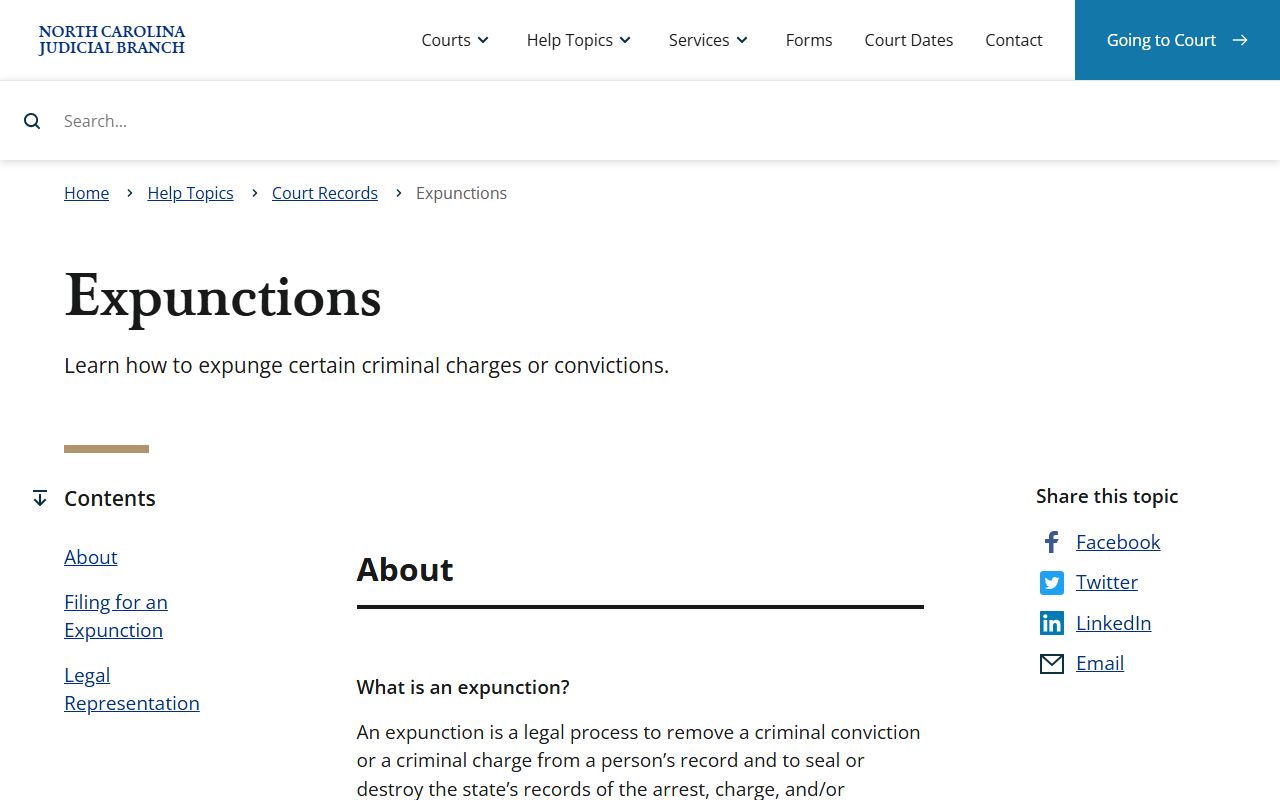
Expunction rules depend on the charge, disposition, waiting period, and statute, so the exact Iredell case record should be identified before filing.
Public Access to Iredell Criminal Records
Public access to Iredell County criminal court records is based on both public-records law and court-record rules. N.C. Gen. Stat. 7A-109 requires clerks to maintain court records and keep them open for public inspection unless law provides otherwise. N.C. Gen. Stat. 132-1 defines public records broadly. Law-enforcement records are handled separately under N.C. Gen. Stat. 132-1.4, which is why a sheriff arrest record and a clerk criminal case file are not the same source.
Note: NC Courts directs background-check users to the county clerk's office, not Portal alone.
North Carolina statute 15A-145.5 is one researched expunction source for certain nonviolent offenses.
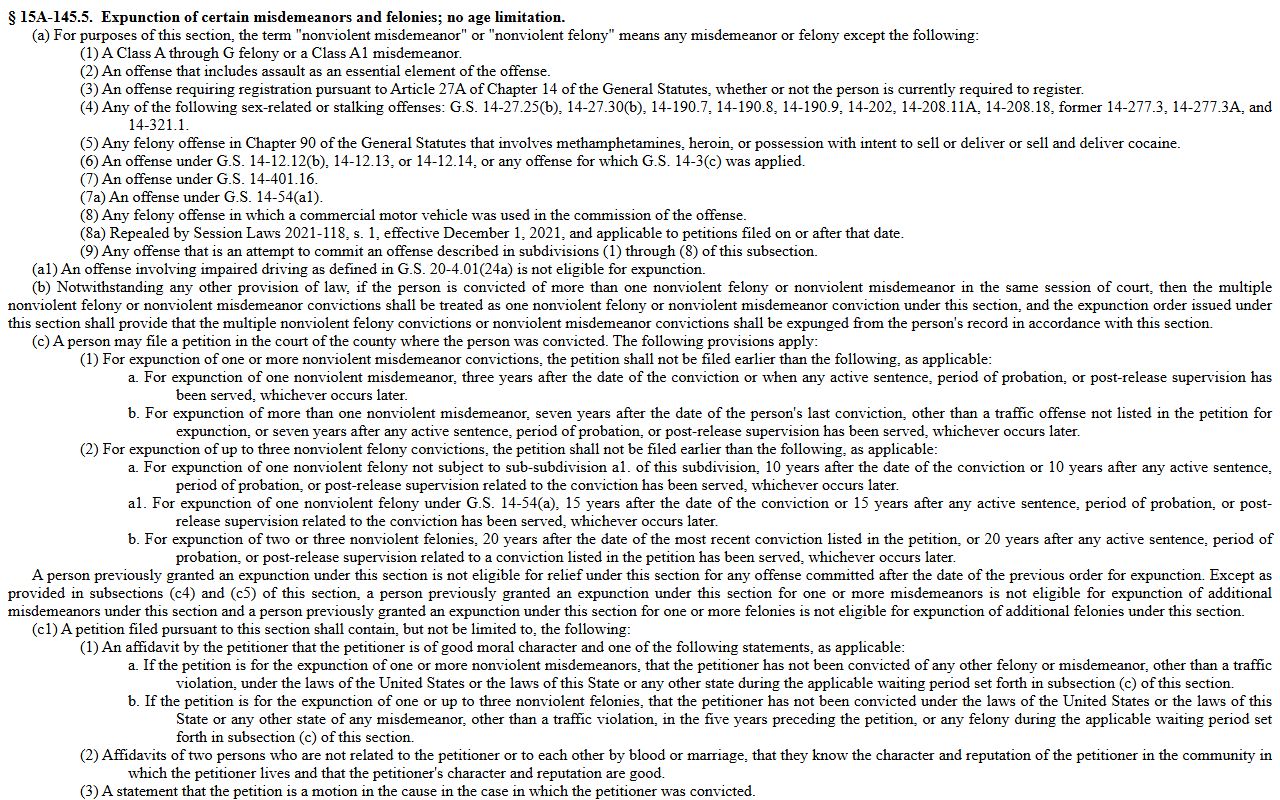
The statute is relevant only when the specific conviction, age of record, prior history, and statutory conditions fit.
Restricted Iredell Criminal Court Records
Juvenile delinquency records are not ordinary public criminal court records. Chapter 7B limits access to juvenile material, and juvenile expunction has its own process. Adoption and mental health records are also restricted, though those are not ordinary criminal files. Domestic violence, minor-identifying information, protected addresses, Social Security numbers, financial account numbers, and sealed attachments may be redacted or withheld.
The research did not locate an official Iredell-named public defender office page in the accessible source set. North Carolina Indigent Defense Services remains the statewide resource for appointed counsel and public defender information. A person seeking appointed counsel should raise that issue with the court at first appearance or through court channels, not by asking the District Attorney for defense help.
The North Carolina juvenile code sections are a required restriction source for Iredell County criminal court records.
Juvenile confidentiality is one reason public criminal court searches can be incomplete even when a court event occurred.